 EN
EN English
 русский
 Español
 Polskie
Quality-First, Customer-Focused, and Excellence-Driven.
Contact
- ADDRESS: No.68 Shuanglin Street, Wucheng District, Jinhua, Zhejiang, China
- PHONE: +86-13705895838
- PHONE: +86-579-83936588
- FAX: +86-579-83921166
- EMAIL: [email protected] / [email protected] / [email protected] / [email protected] / [email protected]


Industry News
Can a Simpler BBQ Tent Design Make Outdoor Projects Easier to Manage?
2026-10-16
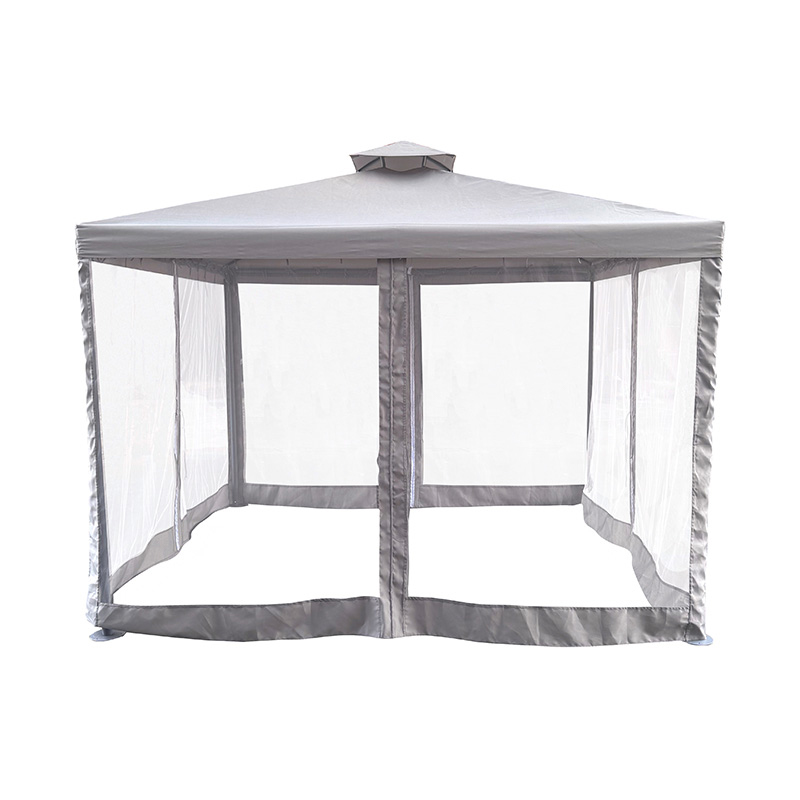
For outdoor equipment buyers, product simplicity is not only about appearance. A BBQ tent may need to be transported over long distances, stored before installation, assembled at different locations, and reordered when a project expands. For an Outdoor Simple BBQ Tent, these practical requirements can influence the overall purchasing experience as much as the shelter itself. From a manufacturer's perspective, a well-planned structure should balance usable space, component organization, installation convenience, and production consistency rather than adding complexity without a clear purpose.
Think About the Product Before It Is Assembled
A finished tent can look very different from the individual components inside its packaging. Buyers should therefore consider how the structure is divided before installation.
Posts, roof sections, connectors, panels, and accessories should have a logical relationship so that the product can be packed and handled efficiently. A manufacturer can review the component structure during product development to identify parts that may be simplified or standardized.
This can make the product easier to prepare for both production and delivery.
Make Components Easy to Identify
Assembly becomes more manageable when individual parts are clearly organized. This is particularly useful for buyers handling several units at the same time.
A practical product specification can identify:
- Main frame components
- Roof components
- Connection hardware
- Optional accessories
- Installation-related parts
- Packaging groups
Clear identification reduces the possibility of mixing similar components and gives installers a more straightforward reference during assembly.
Consider Assembly Sequence
The order in which components are installed can affect the actual user experience. A structure that looks simple on paper may become inconvenient if several parts need to be installed in a difficult sequence.
Manufacturers can consider the assembly relationship between the frame, roof, side sections, and accessories during development. Buyers can also request clear assembly information when evaluating a customized configuration.
The goal is to make the physical installation correspond with the product design rather than requiring unnecessary adjustment on site.
Keep Customization Under Control
Customization can make a BBQ tent more suitable for a particular project, but too many variations can make purchasing and production harder to manage.
A useful approach is to keep the main structure standardized while adjusting selected elements according to the project. Dimensions, color, side configurations, roof options, or accessory combinations can be discussed individually.
This gives buyers greater flexibility without creating an entirely different product for every order.
Protect the Structure During Transportation
Outdoor structures often contain long profiles and multiple smaller components, so packaging needs to reflect the actual product configuration. Components should be protected against unnecessary movement, surface contact, and handling damage during transportation.
For manufacturers, packaging design should be considered together with the product structure. The objective is to ensure that the components remain organized and protected until the buyer begins installation.
This is especially useful for distributors who need to receive, store, and later dispatch multiple units.
Build a Repeatable Product Configuration
A simple product becomes easier to purchase when its specifications can be repeated accurately. Buyers should keep a record of the approved dimensions, frame configuration, roof arrangement, color, accessories, and packaging requirements.
When another order is placed, the manufacturer can work from this reference instead of rebuilding the specification from informal messages.
This approach is useful for distributors, contractors, and buyers managing multiple outdoor projects with similar requirements.
Leave Room for Future Adjustments
A repeatable design should not prevent future development. Outdoor projects may change, and buyers may eventually need a different size, accessory, or layout.
A manufacturer can preserve the core structure while identifying which components can be adjusted without redesigning the entire product. This makes customization more controlled and can help buyers develop several related configurations within one product range.
For an Outdoor Simple BBQ Tent, simplicity is therefore a manufacturing and purchasing advantage when it is supported by thoughtful component design, clear identification, practical assembly, protected packaging, and repeatable specifications. Buyers can gain more control over transportation, installation, inventory, and future orders, while manufacturers have a clearer basis for producing consistent outdoor structures for different projects.



We are a company integrating production and trade, specializing in the research and development and manufacturing of outdoor leisure products.
Quick Links
Keep In Touch
-
 +86-13705895838
-
 +86-579-83936588
-
 +86-579-83921166
-
 [email protected] / [email protected] / [email protected] / [email protected] / [email protected]
-
 No.68 Shuanglin Street, Wucheng District, Jinhua, Zhejiang, China
Mobile
Copyright © Jinhua Yilixin Industry&Trading Co.,Ltd. All Rights Reserved.

High-Quality Outdoor Tent

