 EN
 English
 русский
 Español
 Polskie

Quality-First, Customer-Focused, and Excellence-Driven.

Contact
- ADDRESS: No.68 Shuanglin Street, Wucheng District, Jinhua, Zhejiang, China
- PHONE: +86-13705895838
- PHONE: +86-579-83936588
- FAX: +86-579-83921166
- EMAIL: [email protected] / [email protected] / [email protected] / [email protected] / [email protected]
 Home / News / Industry News / What Should Buyers Consider When an Outdoor BBQ Tent Is Used Season After Season?

Industry News
What Should Buyers Consider When an Outdoor BBQ Tent Is Used Season After Season?
2026-10-23
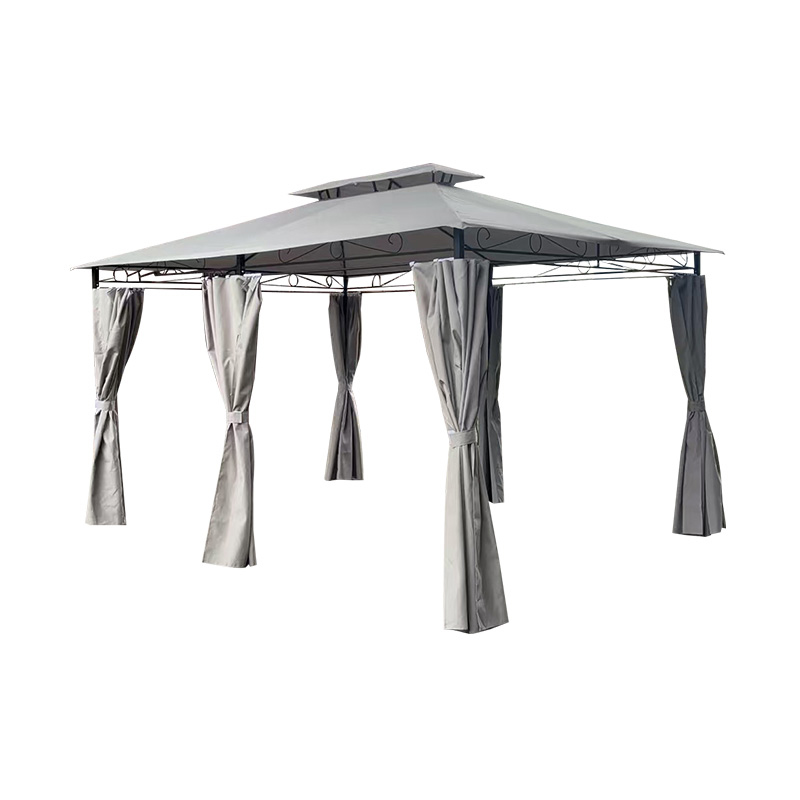
An outdoor BBQ tent is often purchased for more than a single occasion. Depending on the project, it may be assembled during a warm season, stored for a period, and used again when outdoor activities resume. This makes long-term handling an important part of product selection. For buyers sourcing an Outdoor Simple BBQ Tent, the practical questions go beyond appearance and initial setup. Storage, cleaning, component inspection, replacement, and product records can all influence how easily the tent remains useful over repeated seasons. A manufacturer can address these requirements during product development instead of treating them as after-sales concerns.
Plan for Periods of Non-Use
Outdoor equipment may spend considerable time packed away between periods of use. Buyers should therefore consider how the structure and its individual components will be stored when the tent is not assembled.
The product should have a clear storage method that keeps major components organized and reduces unnecessary contact between different parts. Buyers managing several units can also benefit from labeling systems that make each set easier to identify when it is needed again.
A manufacturer can design packaging and component organization around this repeated use cycle.
Make Cleaning Practical
BBQ activities can leave grease, food residue, smoke deposits, and other contaminants around the cooking area. The surfaces around the tent should therefore be practical to inspect and clean according to the intended application.
Buyers should consider which areas are likely to require regular cleaning and whether the structure provides reasonable access to them. Simple construction can be useful here because fewer unnecessary components may make routine cleaning easier to manage.
Inspect Components Before Reassembly
After storage, the tent should not simply be assembled without checking its components. Parts may have been moved, packed, or handled since their previous use.
A basic inspection can focus on:
- Frame components and connection points
- Fasteners and small hardware
- Roof or covering sections
- Surface condition
- Accessories and detachable parts
- Signs of deformation or handling damage
This provides an opportunity to identify issues before the structure returns to service.
Think About Replaceable Parts
Repeated use can eventually require individual components to be replaced. Buyers should consider whether commonly handled parts can be identified and reordered separately rather than replacing an entire structure.
For distributors and project buyers, keeping records of component names and specifications can make future purchasing easier. A manufacturer can also use the original product reference to determine which replacement component corresponds to the approved configuration.
This is particularly useful when several similar tent models are managed at the same time.
Keep the Product Easy to Reconfigure
Outdoor needs may change between seasons. A buyer may want a more open configuration at one time and additional side coverage at another.
Where the product design allows it, modular components can provide greater flexibility without requiring a completely new structure. The important point is to define which components are interchangeable and which are specific to a particular configuration.
Manufacturers can take these requirements into account during product development.
Maintain a Stable Product Reference
Seasonal purchasing becomes easier when the original product specification is preserved. Buyers can record the approved dimensions, materials, colors, components, accessories, and packaging configuration.
When a new order is required months later, the manufacturer can refer to the same information instead of relying on an old product description or incomplete communication.
This also helps prevent gradual changes from appearing between different purchasing cycles.
Prepare for Long-Term Product Planning
For businesses purchasing BBQ tents for multiple projects, long-term planning can be more useful than treating each order separately. A stable base configuration can support different sizes, colors, accessories, or project-specific options while keeping the main product recognizable.
From a manufacturer's perspective, this approach also creates a clearer production structure. The factory can distinguish standard components from customized elements and manage future orders more efficiently.
An Outdoor Simple BBQ Tent should therefore be considered not only for its appearance on the day it is installed, but also for how it will be stored, cleaned, inspected, reconfigured, and reordered over time. When these practical details are considered during product development, buyers can manage seasonal use more easily, while manufacturers can provide a clearer and more consistent product reference for future supply.



We are a company integrating production and trade, specializing in the research and development and manufacturing of outdoor leisure products.
Quick Links
Keep In Touch
-
 +86-13705895838
-
 +86-579-83936588
-
 +86-579-83921166
-
 [email protected] / [email protected] / [email protected] / [email protected] / [email protected]
-
 No.68 Shuanglin Street, Wucheng District, Jinhua, Zhejiang, China
Mobile
Copyright © Jinhua Yilixin Industry&Trading Co.,Ltd. All Rights Reserved.

High-Quality Outdoor Tent

