 EN
EN English
 русский
 Español
 Polskie
Quality-First, Customer-Focused, and Excellence-Driven.
Contact
- ADDRESS: No.68 Shuanglin Street, Wucheng District, Jinhua, Zhejiang, China
- PHONE: +86-13705895838
- PHONE: +86-579-83936588
- FAX: +86-579-83921166
- EMAIL: [email protected] / [email protected] / [email protected] / [email protected] / [email protected]
 Home / News / Industry News / From Backyard to Boardroom: How Pergola Manufacturers and Outdoor Leisure Products Suppliers Are Redefining the Global Patio Furniture Market
Industry News
From Backyard to Boardroom: How Pergola Manufacturers and Outdoor Leisure Products Suppliers Are Redefining the Global Patio Furniture Market
2026-03-19
The global outdoor living industry is in the midst of a structural transformation. Pergola manufacturers, outdoor leisure products suppliers, and patio furniture set designers are no longer serving a niche market — they are at the epicenter of a multi-billion-dollar shift in how people live, work, entertain, and recover. Driven by rising disposable incomes, a post-pandemic reappraisal of residential space, and accelerating smart home integration, demand for premium outdoor structures and furniture has surged to record levels heading into 2026.
A Market Reaching New Heights
The global outdoor furniture market is on a powerful upward trajectory. Valued at approximately $56 billion in 2025, the sector is forecast to reach $81.44 billion by 2032 — representing a compound annual growth rate (CAGR) of 5.5%. Within this landscape, the aluminum pergola segment alone carries a valuation of over $3 billion, with analysts predicting a CAGR of 6.5% through to 2030.
North America leads global consumption, holding an estimated 31.2% share of the pergolas market in 2025. The United States, bolstered by high disposable incomes and a culture that prizes outdoor entertaining, remains the single most important market for premium pergola manufacturers and patio furniture set suppliers. Asia Pacific, meanwhile, is the fastest-growing region, projected to account for 21.5% of the global share — fueled by rapid urbanization, rising middle-class spending power, and a growing appetite for lifestyle-oriented home improvements.
Global Outdoor Living Market Snapshot (2025–2032)
|
Product Segment |
2025 Market Value |
Projected CAGR |
Key Driver |
|
Aluminum Pergolas |
$3.0 Billion+ |
6.5% (2025–2030) |
Smart Tech Integration |
|
Outdoor Furniture Sets |
$56.0 Billion |
5.5% (2025–2032) |
Hospitality & Residential |
|
Louvered Roof Systems |
$1.2 Billion+ |
7.2% (2025–2030) |
Motorization Demand |
|
Patio Dining Sets |
Segment of $56B |
5.0%+ |
Al Fresco Dining Culture |
Sources: Coherent Market Insights; Grand View Research; Cognitive Market Research (2025)
The Pergola Manufacturer's New Playbook
For decades, pergolas were largely static wooden structures — pleasant but passive garden additions. Today, the product category has been radically reimagined. Leading pergola manufacturers now deliver sophisticated architectural systems integrating motorized louvered roofs, built-in LED lighting, retractable side screens, smart weather sensors, and app-controlled automation. These are no longer garden accessories; they are engineered outdoor rooms.
Aluminum has emerged as the material of choice for forward-thinking manufacturers, owing to its corrosion resistance, structural strength, low maintenance requirements, and versatility in powder-coated color finishes. Unlike wood, aluminum does not rot, warp, or require seasonal repainting — characteristics that translate directly into lower total cost of ownership for buyers and stronger value propositions for suppliers.
The bioclimatic pergola — designed to optimize natural ventilation, climate control, and energy efficiency — represents one of the fastest-growing sub-categories. Some manufacturers now incorporate solar-powered motors and recycled aluminum as standard features, responding directly to the growing demand for eco-certified outdoor products from both residential buyers and commercial specifiers.
Pergola Type Comparison: Features, Applications & Pricing
|
Pergola Type |
Key Features |
Ideal Application |
Price Range (USD) |
|
Motorized Louvered |
Adjustable louvers, auto weather sensors |
Luxury homes, hotels |
$8,000 – $25,000+ |
|
Fixed Aluminum Frame |
Low maintenance, powder-coated finish |
Commercial patios |
$3,500 – $12,000 |
|
Bioclimatic |
Solar-powered motors, eco materials |
Green-certified buildings |
$10,000 – $30,000+ |
|
DIY Modular Kit |
Easy assembly, customizable size |
Residential backyard |
$1,500 – $6,000 |
|
Freestanding Wood |
Natural aesthetic, traditional appeal |
Garden & resort |
$2,000 – $10,000 |
Note: Prices are indicative retail ranges for the North American and European markets. Commercial project pricing may vary.
Outdoor Leisure Products Suppliers: Meeting a New Kind of Customer
The profile of the outdoor leisure products buyer has shifted considerably in recent years. Where purchases were once driven primarily by older, established homeowners investing in their primary residence, the market now sees strong participation from millennial households — who account for approximately 37% of outdoor furniture purchases in the United States — as well as a robust commercial segment spanning boutique hotels, rooftop restaurants, resort developers, and co-working spaces.
Suppliers serving these buyers must contend with a new set of expectations. Durability, customization, and aesthetic sophistication are non-negotiable. Weather resistance — including UV stability, rust resistance, and all-season structural integrity — is a core purchase driver rather than an optional enhancement. Sustainable sourcing credentials are increasingly scrutinized, with buyers favoring suppliers who can demonstrate the use of recycled materials, FSC-certified wood, and low-emission manufacturing processes.
The demand for one-stop outdoor leisure solutions has also grown. Buyers — particularly in the commercial segment — increasingly prefer to source pergola structures, patio furniture sets, outdoor lighting, heating, and ancillary accessories from a single supplier or a tightly coordinated supplier ecosystem. This consolidation trend is reshaping supplier strategies and accelerating vertical integration across the industry.
Patio Furniture Sets in 2026: Design, Function, and the Blurring of Boundaries
The patio furniture set category is undergoing its own transformation. In 2026, the dominant design philosophy is no longer about matching — it is about curating. Interior designers and trend analysts note a decisive shift away from identical, coordinated patio furniture sets toward eclectic, layered outdoor rooms that blend materials, textures, and aesthetic influences in a manner historically associated with interior design.
Functionally, patio furniture sets are being engineered to support a wide range of outdoor activities. The 2026 outdoor living room may include sound systems, wireless charging surfaces, patio heating and cooling elements, and furniture with ergonomic profiles that rival indoor seating in terms of comfort. Outdoor kitchens — featuring professional-grade appliances, integrated bars, and full dining configurations — are cited by 43% of design professionals as one of the most recommended additions to residential projects.
Wellness is another defining theme. Outdoor spaces dedicated to yoga, meditation, and mindful relaxation are gaining traction, supported by data from major real estate platforms that identify wellness-oriented outdoor features as a growing priority for homebuyers. Requests for hot tubs, saunas, and contemplative garden spaces are all increasing, creating cross-sell opportunities for outdoor leisure products suppliers capable of offering complete environment solutions.
Outdoor Furniture Material Comparison: Durability & Performance
|
Material |
Durability |
Maintenance |
Weather Resistance |
Best For |
|
Aluminum |
5/5 - Outstanding |
Very Low |
Excellent |
Commercial & Modern Residential |
|
Teak Wood |
4/5 - Very Good |
Medium |
Very Good |
Luxury Residential |
|
Steel |
4/5 - Very Good |
Medium |
Good |
Large-Scale Commercial |
|
HDPE Poly |
4/5 - Very Good |
Very Low |
Excellent |
High-Traffic Outdoor Areas |
|
WPC Composite |
3/5 - Good |
Low |
Good |
Budget Residential |
Rating Scale: 5/5 = Outstanding | 4/5 = Very Good | 3/5 = Good
Supply Chain Geography: Where the Industry is Made
China's Guangdong Province — centered on Foshan and Guangzhou — remains the global epicenter of aluminum pergola manufacturing, with over 70% of major export-oriented suppliers operating within this cluster. The region benefits from mature aluminum alloy supply chains, skilled labor, integrated logistics networks, and decades of accumulated manufacturing expertise. Factory footprints in the region typically range from 10,000 to 40,000+ square meters, with leading facilities operating dedicated R&D teams, CNC precision cutting equipment, and automated powder-coating lines.
Zhejiang and Fujian provinces represent emerging production hubs, particularly for hybrid pergola designs combining wood-composite elements with metal frames. These regions offer competitive pricing for mid-volume orders and are gaining recognition for design innovation. Shandong province contributes significantly to large-scale commercial pergola production, leveraging its established steel industry to offer cost-competitive, steel-reinforced models for infrastructure and hospitality projects.
European manufacturers — particularly in Italy, Belgium, France, and Poland — continue to command premium positioning in the global market, with brands recognized for their engineering precision, design credentials, and compliance with demanding European standards including CE certification. These manufacturers serve as benchmarks for product quality and are frequently referenced by Chinese and North American manufacturers seeking to upgrade their specifications.
How to Evaluate Outdoor Leisure Products Suppliers: A Buyer's Framework
For buyers — whether retail distributors, hospitality developers, or landscape contractors — selecting the right outdoor leisure products supplier requires a structured evaluation process. Key criteria include production capacity and staff scale, quality certifications such as ISO 9001, SGS, or TÜV, on-time delivery performance, reorder rates as a proxy for client satisfaction, and the availability of OEM and private label manufacturing options.
Physical factory audits and prototype sampling remain important tools for de-risking supplier selection. Leading manufacturers typically offer samples within 7 to 14 days for standard configurations, with complex custom designs requiring up to three weeks. Virtual factory tours have become increasingly accepted as an efficient alternative for preliminary qualification, with most established manufacturers in key production clusters able to accommodate same-week appointments.
Shipping considerations are also critical. Major export ports — including Shenzhen and Ningbo — facilitate consolidated container shipments to North America, Europe, and Australia. Buyers sourcing directly from manufacturers should account for lead times, freight costs, and customs compliance. Domestic manufacturers or those with regional distribution hubs can offer significantly shorter lead times, which may justify a premium price for time-sensitive projects.
Looking Ahead: Trends Shaping the Next Three Years
Several structural trends are poised to define the competitive landscape for pergola manufacturers and outdoor leisure products suppliers through 2028 and beyond. Smart outdoor technology — including IoT-enabled pergola systems, app-controlled climate management, and integrated outdoor entertainment infrastructure — will move from premium differentiator to mainstream expectation. Suppliers who fail to develop compelling smart product roadmaps risk ceding premium market share.
Sustainability will intensify as a competitive dimension. Eco-certifications, recyclable material content, and carbon-conscious manufacturing are increasingly built into commercial and institutional procurement specifications. Manufacturers who can credibly document their environmental performance — through third-party certifications, supply chain audits, and lifecycle assessments — will be better positioned to win high-value contracts.
Finally, the blurring boundary between indoor and outdoor living will continue to drive product innovation in the patio furniture set category. As consumers invest in outdoor spaces that rival indoor rooms in terms of functionality and comfort, the opportunity for outdoor leisure products suppliers to capture wallet share from traditional home furnishings budgets will only grow. The backyard, in short, has become the new living room — and the brands that understand this shift will define the next decade of the outdoor living industry.

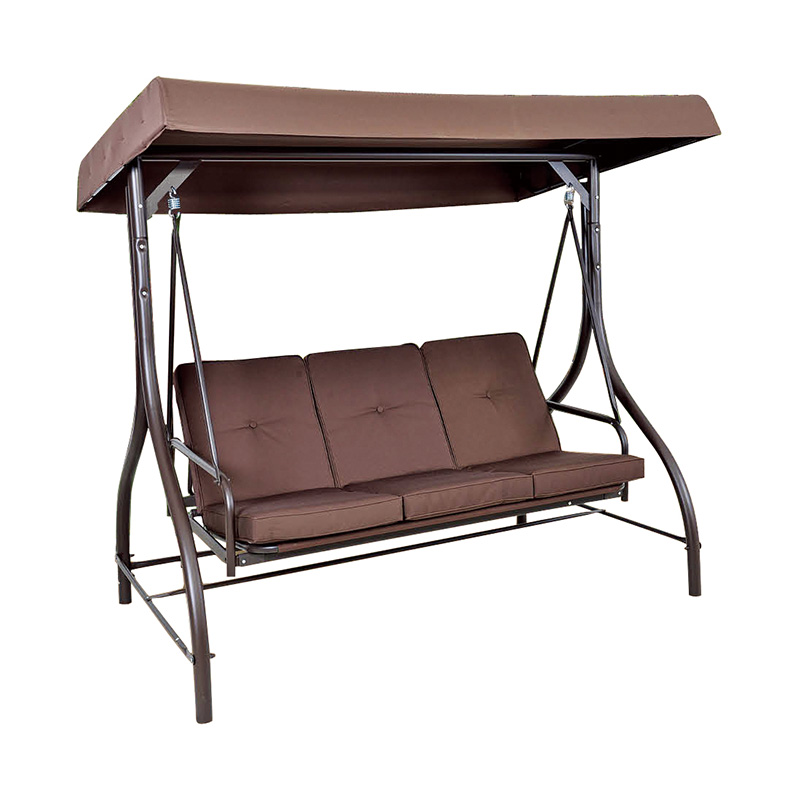



We are a company integrating production and trade, specializing in the research and development and manufacturing of outdoor leisure products.
Quick Links
Keep In Touch
-
 +86-13705895838
-
 +86-579-83936588
-
 +86-579-83921166
-
 [email protected] / [email protected] / [email protected] / [email protected] / [email protected]
-
 No.68 Shuanglin Street, Wucheng District, Jinhua, Zhejiang, China
Mobile
Copyright © Jinhua Yilixin Industry&Trading Co.,Ltd. All Rights Reserved.

High-Quality Outdoor Tent

